


What Scents Are Safe for Babies? A Simple Guide for Newborn Environments
Updated: 5 days ago
What scents are safe for babies?
Scent in a baby’s environment should always be minimal and carefully controlled.
Newborns have a highly developed sense of smell, but their respiratory and nervous systems are still developing. This makes them more sensitive to airborne substances, including fragrance.
Babies do not need added scent in their environment.However, very subtle scent used occasionally in a well-ventilated space is generally better tolerated than strong or constant exposure.
Why scent matters for babies
Scent directly affects how a baby experiences their environment.
Strong or persistent smells can act as sensory stimulation, which may influence:
sleep quality
settling ability
overall calmness
Because babies cannot regulate stimulation effectively, even small environmental factors can have a noticeable impact.
What scents to avoid around babies

If you are choosing what scents are safe for babies, it is equally important to understand what to avoid.
Avoid:
strong synthetic fragrances
heavily perfumed candles
air fresheners and sprays
concentrated essential oils
any scent that lingers strongly in the air
These types of scent may:
irritate airways
cause discomfort
overstimulate the nervous system
disrupt sleep patterns
Newborns are particularly sensitive to intensity, not only ingredients.
What scents are safer for babies
If scent is used, it should be very subtle and controlled.
Safer scent use includes:
low intensity
short exposure
good ventilation
distance from the baby
Some gentler scent profiles may include:
soft lavender
chamomile
very light citrus
Even these should remain barely noticeable in the room. The goal is not to scent the space, but to maintain a calm environment.
How scent affects a baby’s sleep and nervous system
Understanding what scents are safe for babies also means understanding how scent affects the body.
A baby’s nervous system is still developing. Strong sensory input, including scent, may lead to:
restlessness
difficulty settling
shorter sleep cycles
Lower sensory input supports better regulation and more stable sleep patterns.
Where candles fit into a baby-safe environment
Candles can be used in a home with a baby, but only when chosen and used carefully.
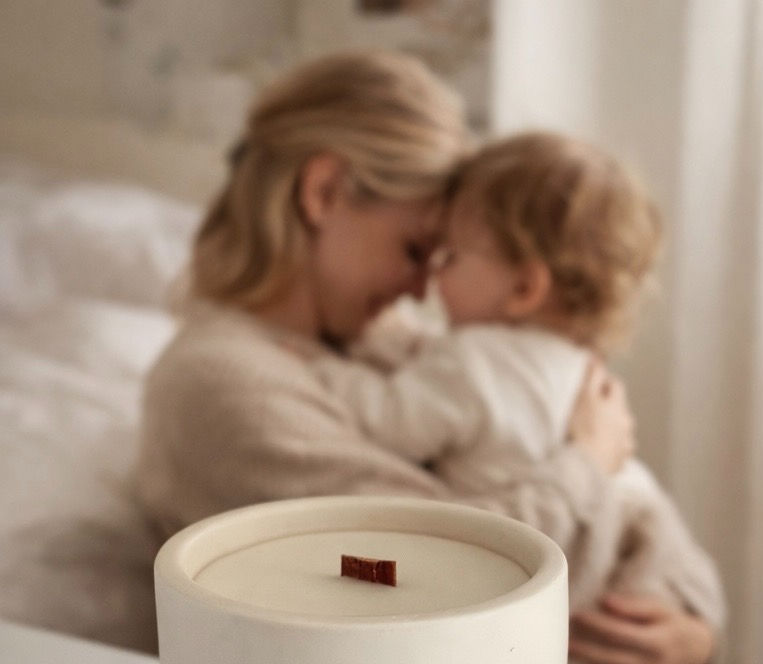
If you are considering what scents are safe for babies, follow these principles:
choose clean-burning wax such as soy
avoid strong or synthetic fragrance
use candles for short periods
keep distance from the baby
ensure proper ventilation
The role of a candle should be to support a calm atmosphere, not introduce noticeable scent.
Matilda Organic candles are designed with this approach in mind, focusing on soft, balanced scent for family environments.
Explore the full candle collection
For more guidance on pregnancy and baby-safe candles,
What scents are safe for babies comes down to one principle: less is more.
Babies benefit from environments with minimal stimulation, clean air and consistent sensory conditions.
Keeping scent subtle, controlled and occasional is the safest approach.
Common questions about scents and babies
Are scented candles safe for babies?
Scented candles can be used with caution, but strong or heavily fragranced candles may be too intense for babies. If used, they should be subtle, used occasionally and in well-ventilated spaces.
Are strong scents bad for babies?
Strong scents can overstimulate a baby’s developing nervous system and may cause discomfort or restlessness. A low-scent or scent-free environment is generally better for newborns.
What smells are safe for newborns?
Newborns do not need added scent. If scent is used, it should be very mild and barely noticeable, such as soft lavender or chamomile, and never overpowering.
Can babies be around scented candles?
Babies can be around candles if they are used safely. This means low-intensity scent, short use, good ventilation and keeping distance from the baby.
Is fragrance safe for babies?
Not all fragrance is suitable for babies. Synthetic and strong fragrances should be avoided, while any scent used should be minimal and gentle.